

Coworking, without the walls.
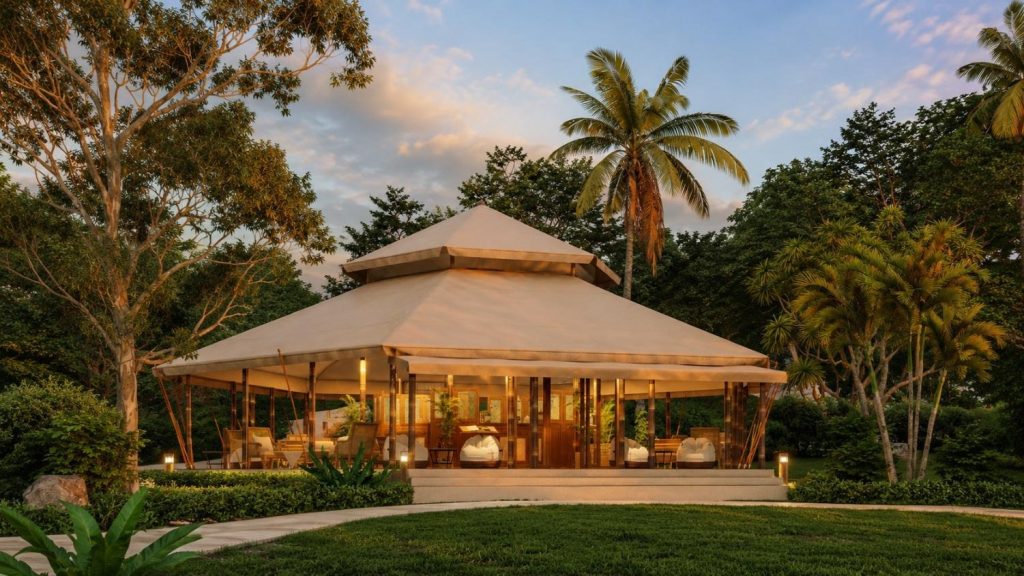
Escape Nomade Coworking Tent at Dusk
“The best ideas rarely come from four white walls.”
There is a particular sound that no office ever gives you. It is the sound of a morning call ending, a laptop closing, and instead of hallway chatter, you hear birdsong. Somewhere past the treeline, a rooster answers a motorbike. That is the moment a growing number of professionals now build their whole week around.
Remote work did not just change where people can work. It changed what they expect from the places they choose to do it. A generation of consultants, founders, designers and freelancers no longer book a “vacation” and a “work trip” separately. They book one long stay, and they want it to hold both. Hospitality operators who understand this are not adding a business center. They are rethinking what a workspace can look like when it is not boxed in by drywall.
That rethink has a name: the coworking tent.
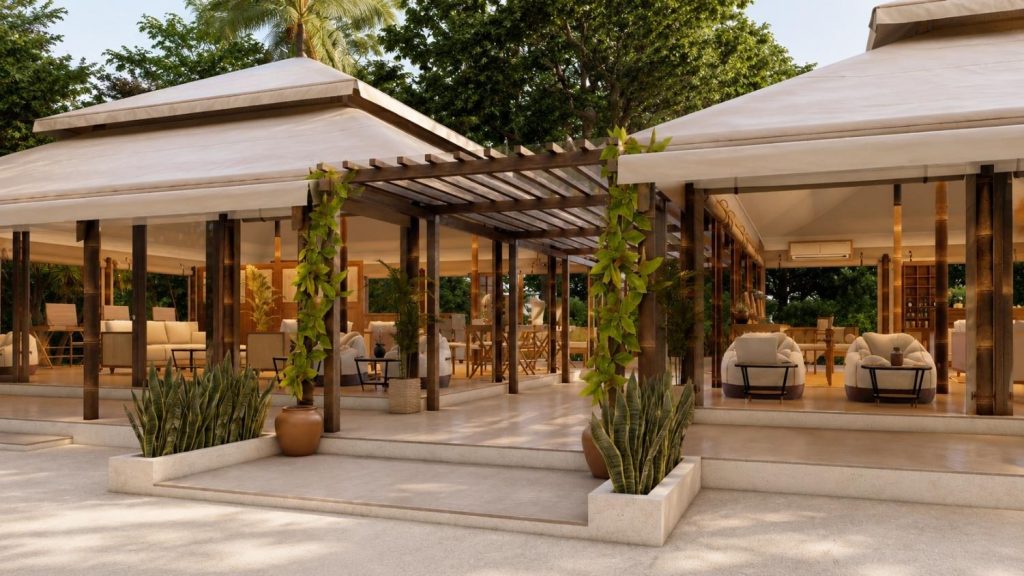
TWO DOUBLE ROOF TENT CONNECTING TO EACH OTHER
Picture the alternative for a moment. Rows of desks under fluorescent light, recycled air, a window if you’re lucky. Now picture answering the same email with rice fields on one side and the ocean on the other, canvas overhead instead of ceiling tiles, and nothing between you and the view but a breeze. One of these is a workplace. The other is a reason to book a longer stay.
For hospitality brands, coworking tents solve a problem conventional offices never could. A meeting room with fluorescent lighting and recycled air could be anywhere, in any city, at any resort. It does nothing to remind a guest why they flew here in the first place. A coworking tent does the opposite. Open sides, natural ventilation, canvas overhead instead of concrete, and the property’s own landscape as a backdrop, so a call from the tent still looks and feels like it could only happen here.
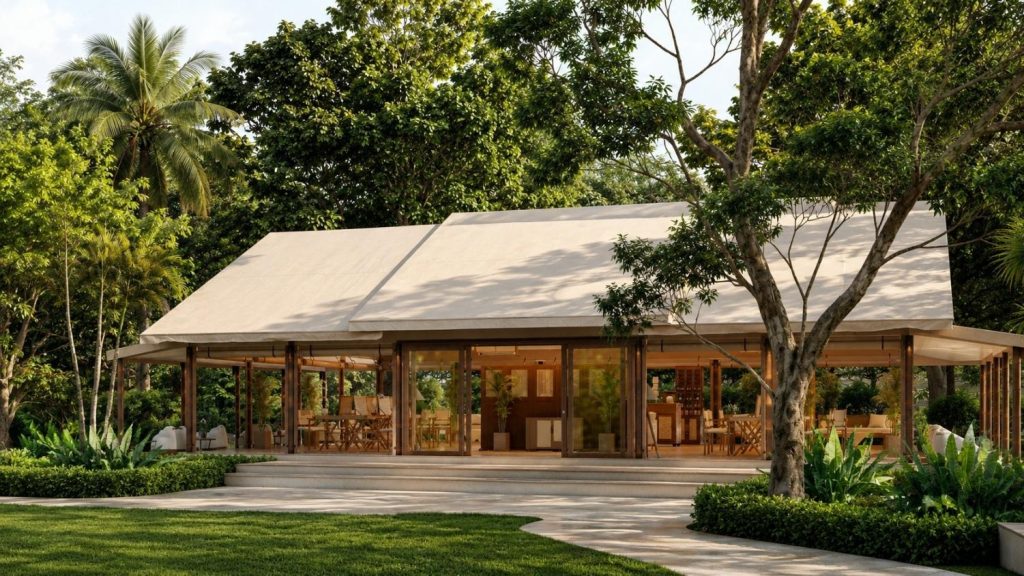
THE TRIO TENT, TUCKED INTO ITS OWN TREE LINE
This is not about giving up structure. It is about designing structure that breathes. Escape Nomade’s Coworking Tent doesn’t come in just one shape — trio roof, hexagon roof, or double tent roof, each one built to sit differently on a site. The trio version shown here spans 180 sqm with two side canopies, room enough for a cluster of desks under the canvas peak, a working bar in one corner, and a lounge of low rattan bean bags where a laptop closes and a conversation opens. It holds a full workday when a team needs to focus, then folds into a workshop, a networking evening, or a private dinner by the same afternoon. One footprint, several jobs, zero concrete poured.
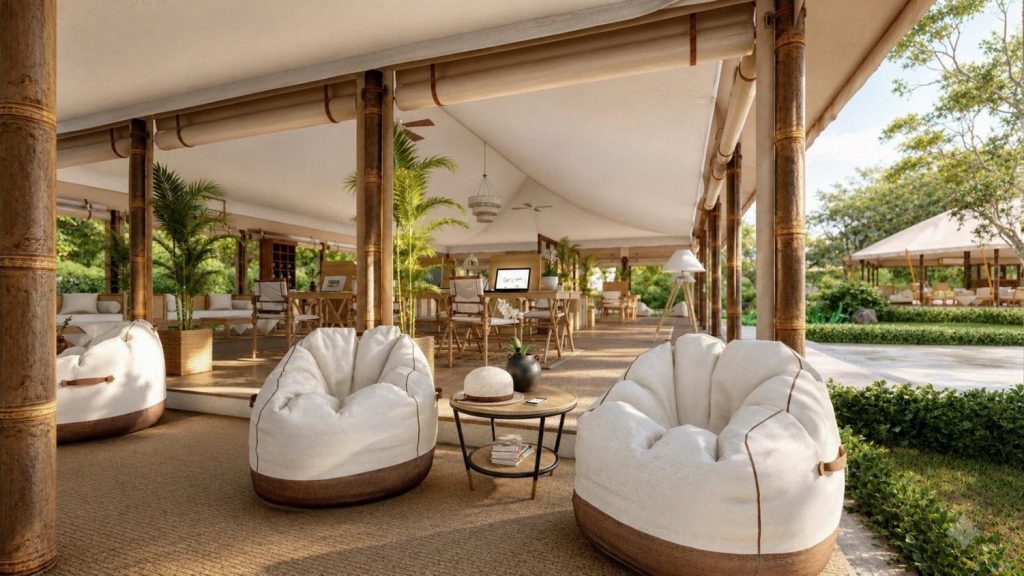
THE TRIO TENT, TUCKED INTO ITS OWN TREE LINE
That flexibility is also where the business case lives. Guests who can work comfortably tend to stay longer, and longer stays change the economics of a property in ways a single amenity rarely can. A coworking tent opens the door to day passes for local remote workers, membership models for return guests, meeting room rentals for small teams passing through, and workshops or networking evenings that bring outside visitors onto the property, sometimes for the first time. Every one of those is a new reason for someone to walk in who was not already a guest.
There is a sustainability case here too, and it is not a footnote. A tented structure goes up without the concrete footprint, the years of construction traffic, or the fixed commitment of a permanent building. It can be relocated, resized, or reconfigured as a property’s needs change, which matters enormously for eco-lodges and destinations built on the promise of a light touch on the land. For guests who choose a property precisely because it treats the landscape with care, a coworking tent is proof of that promise, not a contradiction of it.
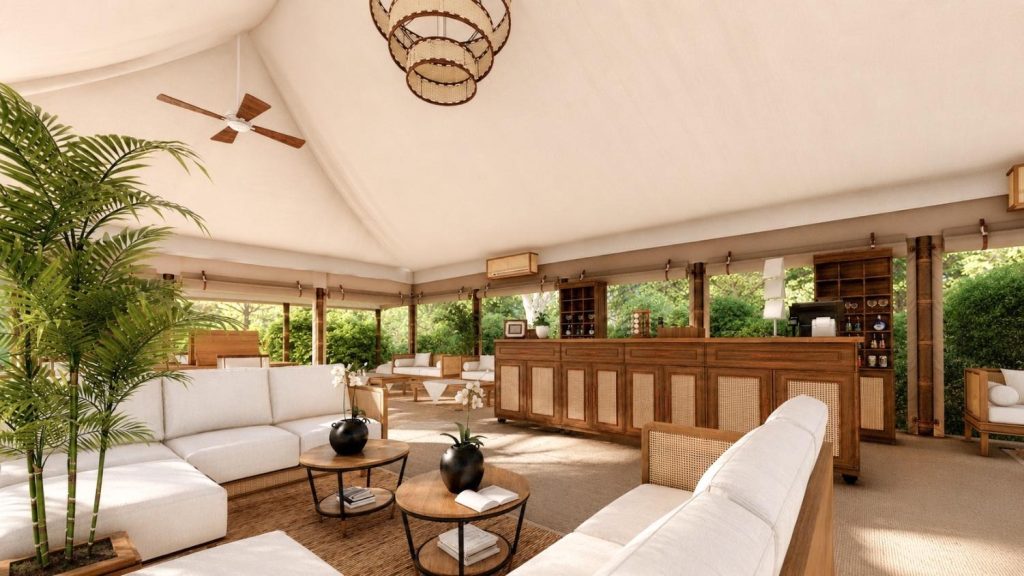
DESK BY DAY, BAR BY EVENING
A quieter benefit shows up in guest reviews more than in spreadsheets. Shared, open workspaces pull strangers into the same room without forcing it. Two guests trade laptops for coffee, a solo traveler ends up joining a group dinner, a short stay turns into a return booking six months later. None of that happens reliably inside a private villa. It happens in shared, well-designed, semi-open spaces, which is exactly what a coworking tent is built to be.
Built on hospitality expertise
None of this is a trend Escape Nomade discovered recently. For more than twenty years, we have designed and built luxury tented villas and structures for hospitality operators around the world, from cliffside retreats to full resort developments. What that work has taught us, project after project, is that guest expectations rarely stand still. What felt like a generous amenity five years ago is now closer to a baseline expectation, and the properties that move first are the ones guests remember.
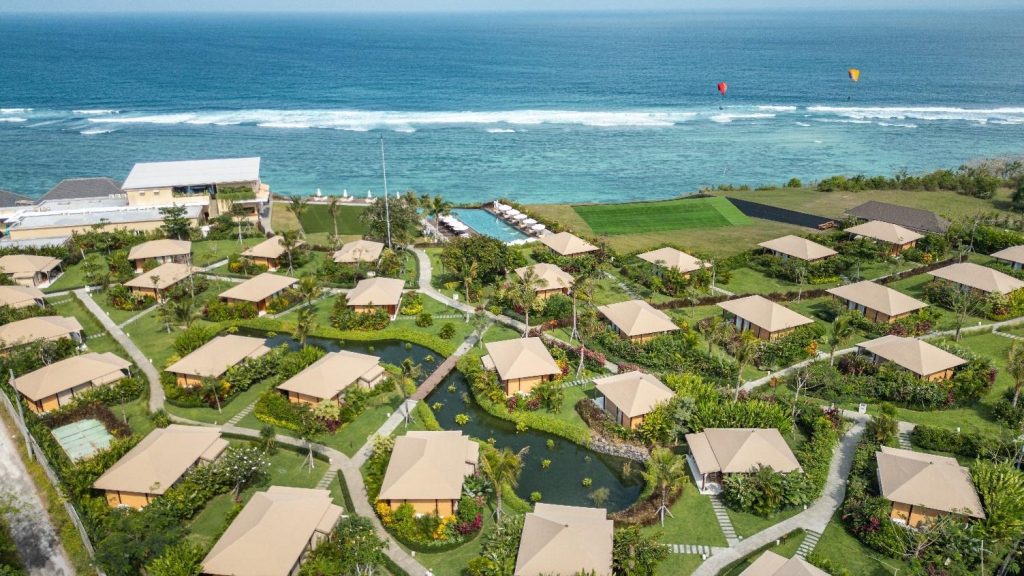
The future of work has no walls.
A coworking tent is one answer to this shift, but it was never meant to be one fixed shape. Every property has a different landscape, a different guest profile, and a different rhythm to protect — which is exactly why the trio, hexagon, and double tent rooflines exist side by side. The right coworking tent should be shaped around the property, not dropped onto it.
The workplace has changed. Travel has changed with it. The properties that adapt will not just fill more rooms during the week, they will become the kind of place people plan their next trip around. Because the best ideas rarely come from four white walls. They come from wherever the view is worth looking up for.
www.escapenomade.com