

How Tented Spa Design Creates Better Wellness Experiences
Ask someone about the best spa they’ve ever visited, and they rarely start with the treatment. They start with the light, or the smell of the air, or how quiet it felt walking in.
That’s the part most people overlook when they plan a spa: the space starts working before anyone lies down on a treatment table. In luxury hospitality, this has pushed resorts toward tented spa design — structures that feel open rather than enclosed, built to sit inside their landscape instead of standing apart from it. This piece looks at what actually makes that work, using a real project in Bali as the reference point.
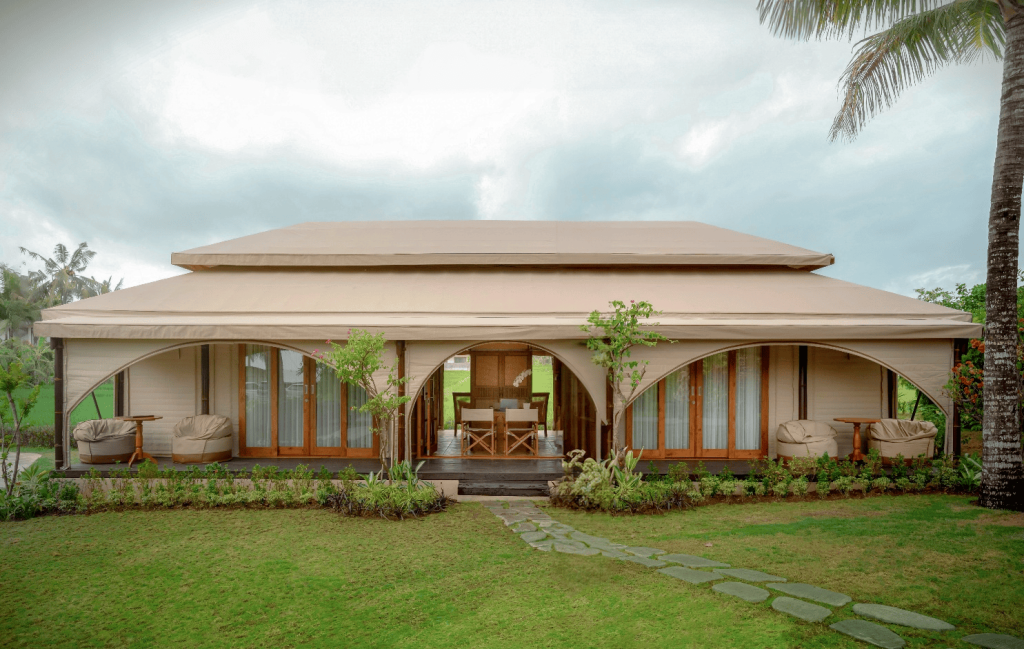
Why Tented Spa Design Needs a Different Kind of Architecture
A restaurant is built for conversation. A villa is built for privacy. A spa needs something else, a setting that steps back and lets a guest stop moving.
Wellness architecture works when nature isn’t an accent but the material itself. Airflow, filtered daylight, a sightline toward the tree line, these aren’t finishing touches. They’re what the calm is actually made of.
Privacy Without Feeling Closed In
Canvas gives a spa its privacy without sealing it off. A guest can still hear the wind and sense the landscape outside, yet feel completely alone. That balance is hard to get right in a solid-walled building — canvas makes it almost automatic.
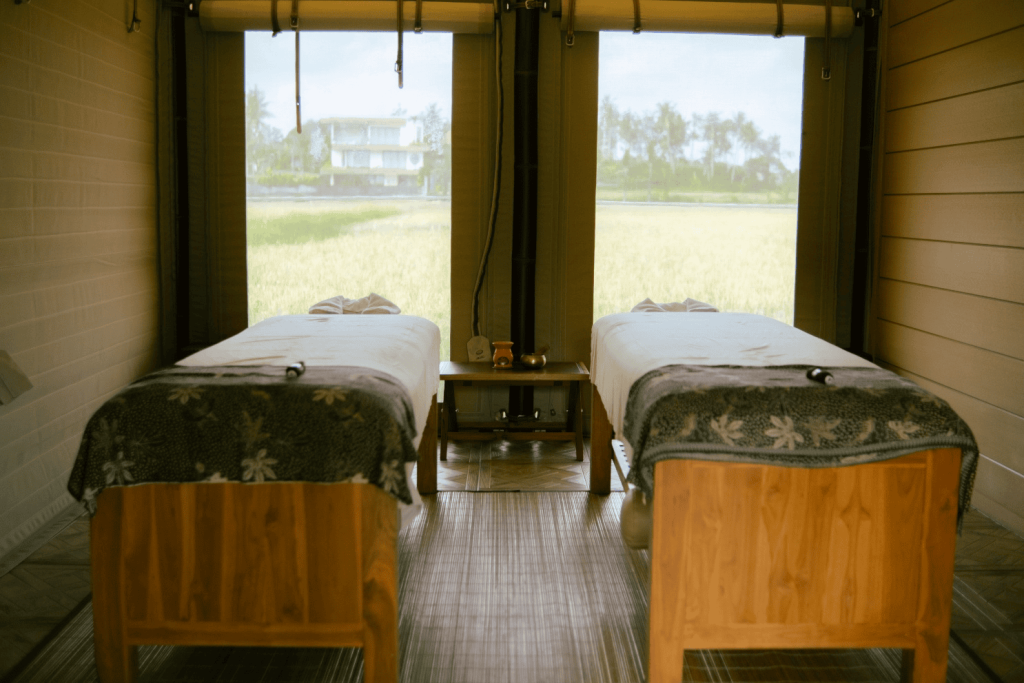
Natural Light Is Part of the Experience
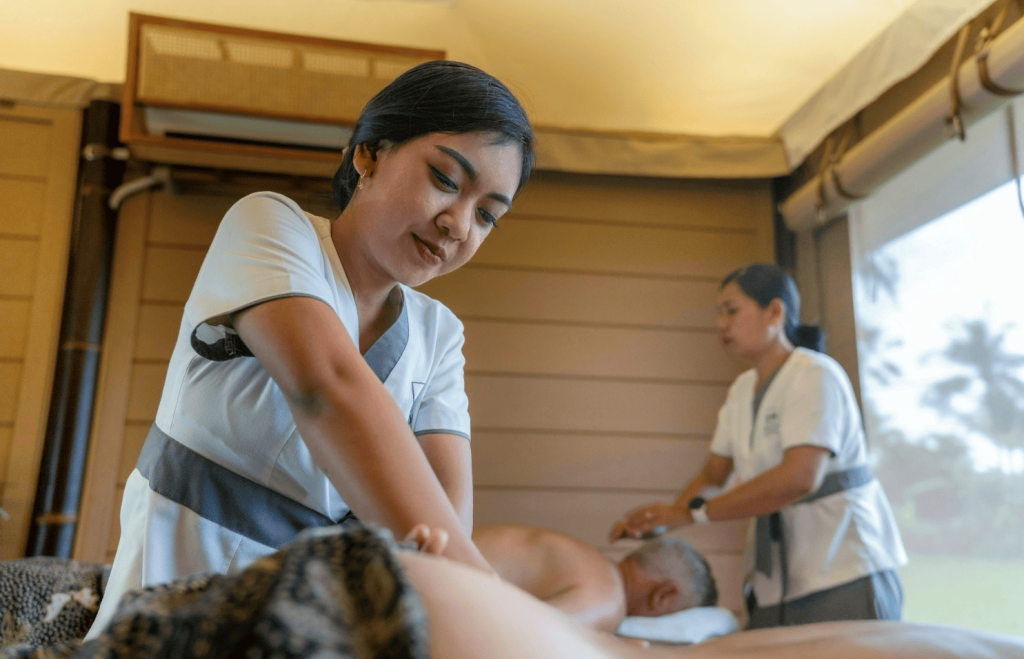
Daylight through canvas doesn’t behave like daylight through glass. It shifts — flat and bright at noon, warmer and lower by late afternoon — without anyone touching a switch. A guest lying still on a treatment table will register that shift even if they couldn’t explain what changed.
“Canvas doesn’t block the outside world. It just slows it down.”
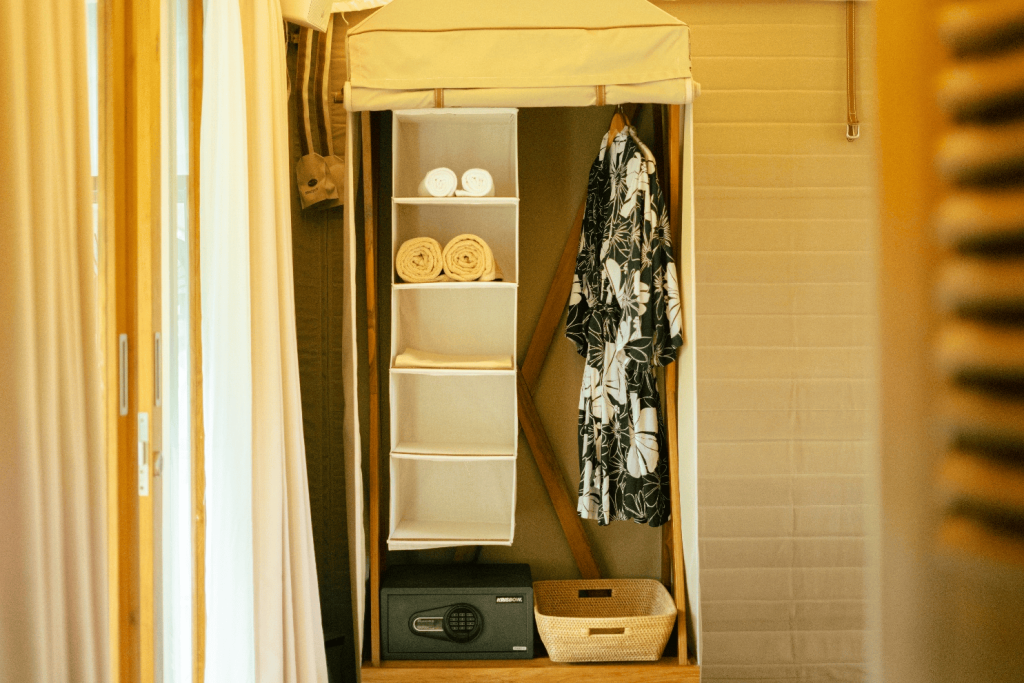
The Feel of the Materials
Canvas has a particular quality up close, a slight give underfoot near the entrance, a faint smell like a sail after rain, the way it softens sound just enough that footsteps stop announcing themselves. Steel framing stays out of sight, doing its structural work invisibly. Timber floors warm the space underfoot in a way tile doesn’t, which matters more than it sounds like it should, in a room built around lying still for an hour.
How Tented Spa Design Comes Together
The process starts on-site, not on a drawing board. Before any canvas goes up, a design team reads where the sun tracks through the day, where the breeze comes from, and how the ground handles rain. A tent set against the wrong slope will feel damp within a season; one aligned with the airflow barely needs mechanical ventilation at all.
Steel framing is engineered and largely prefabricated off-site, then assembled in place — faster and less disruptive than a poured-concrete build. Insulated roofing and passive ventilation handle most of the climate control before any equipment gets involved. Canvas panels are tensioned last, once the frame is anchored and the roofline set. A structure that would take the better part of a year with conventional construction can go from bare plot to finished spa in a matter of weeks.
None of this shows up in the finished space. A guest only notices that the air feels right and the light falls where it should — which is the point. The engineering exists so it can disappear.
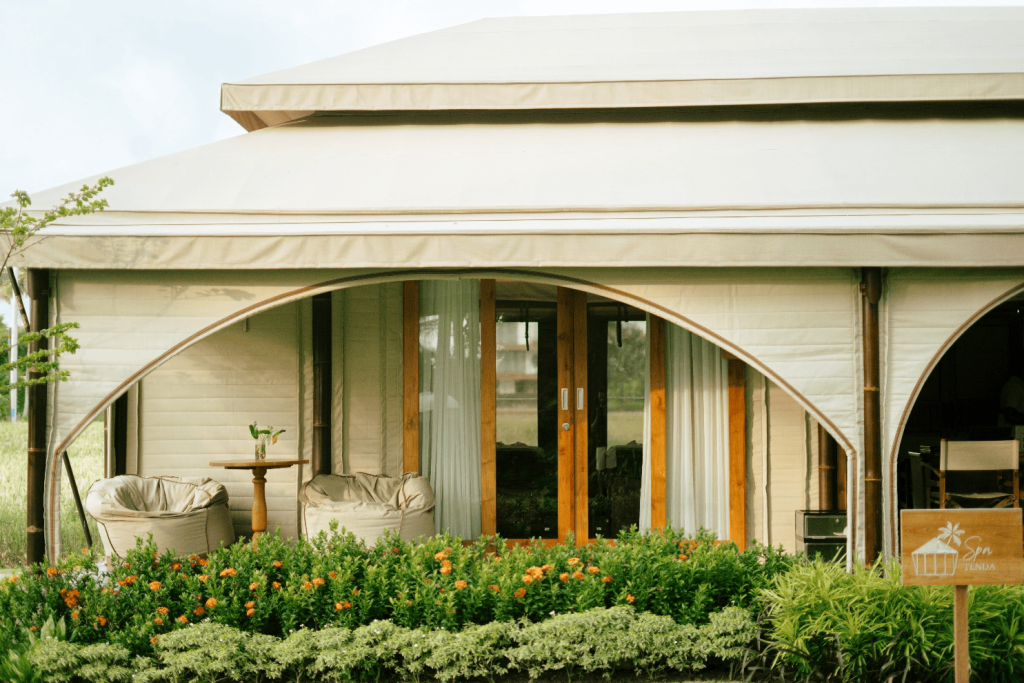
Bali Beach Glamping Resort
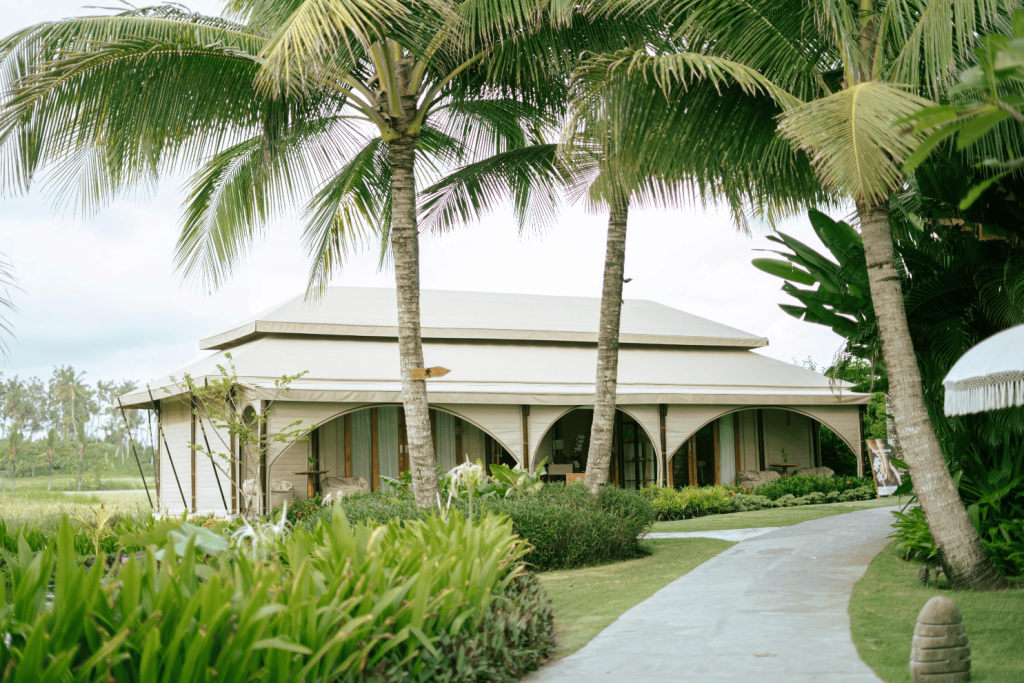
At Bali Beach Glamping Resort, Escape Nomade designed and built a single spa tent as part of the resort’s wider wellness offering. It’s one structure, not a wing or a complex — and it still changes how the property feels to move through.
Guests reach it the same way they reach the restaurant or the beach: on foot, along the same paths that already connect the rest of the resort. Nothing about getting there feels like a special trip.
The tent shares its materials and roofline with the guest accommodations around it, so it reads as part of the resort rather than an addition bolted onto it. One tent was enough to change the guest experience — size had very little to do with it.
A Growing Opportunity for Tented Spa Design in Luxury Hospitality
Wellness tourism isn’t a niche add-on anymore. The Global Wellness Institute reported that wellness tourism spending grew 13.8% in a single year, from 2023 to 2024 — one of the fastest-growing segments within the broader $6.8 trillion global wellness economy. For developers, that pace means real pressure to expand wellness offerings without locking a property into a fixed, permanent footprint.
Tented spa design offers a way to build for that demand without committing to a heavy structure. A spa tent can be added, reconfigured, or expanded as a property grows — and it’s often the first thing guests bring up when they describe the resort afterward.
The Escape Nomade Perspective
Escape Nomade has built wellness spaces across more than 55 countries, and the pattern holds regardless of location: guests remember atmosphere, not square footage. Every project starts the same way, by asking what a guest should feel the moment they step inside, before a single wall goes up.
Architecture that stays out of the way tends to leave the strongest impression. A guest won’t describe the steel framing or the roofline. They’ll just say the place felt calm and mean it.
“Design that lets the feeling arrive first.”
A spa tent, shaped by canvas, timber, and light, and by one simple question: “How should people feel when they arrive?”